Special Sessions

SS1: Emerging Memory Technologies
Chair: Nima TaheriNejadHeidelberg University, Germany & TU Wien, Austria
SS2: HW/SW-Codesign for Deep Learning Systems

Modern deep learning models regularly require significant computational, memory, and energy resources. Specialized hardware components have the potential to massively improve the efficiency of deep learning systems. However, they can only realize their full potential when a closely coordinated co-design strategy between hardware architecture and software optimization is implemented. This special session focuses on this critical interface between hardware and software and examines the research field from three key perspectives: (1) software and compiler optimization, (2) hardware deployment and innovative hardware architectures, and (3) hardware-assisted search for optimal model architectures. Through keynote presentations and an interactive discussion panel, current developments, challenges, and future research directions in the field of efficient execution of deep learning models will be discussed.
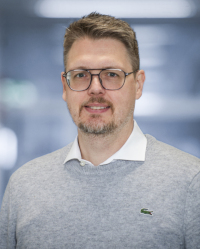
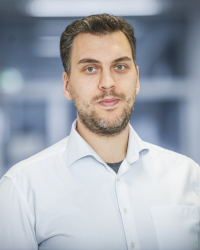
Chair: Gregor Schiele
Chair: Gregor SchieleProfessor, University of Duisburg-Essen, Germany
Dr. Gregor Schiele is professor for embedded systems and leads since november 2014 the Intelligent Embedded Systems group at the University Duisburg-Essen at the campus Duisburg. Before that he was working from 2012 to 2014 at the Insight Centre for Data Analytics and the Digital Enterprise Research Institute (DERI) as well as at the National University of Ireland, Galway. From 2006 to 2012 he was working at the department of Prof. Dr. Christian Becker at the University Mannheim. He wrote his doctorate 2007 at the University Stuttgart at the department of Prof. Dr. Kurt Rothermel.
Chair: Andreas Erbslöh
Chair: Andreas ErbslöhUniversity of Duisburg-Essen, Germany
Andreas Erbslöh is a PostDoc at the Department of Intelligent Embedded Systems and works on novel concepts for resource-efficient AI hardware / systems for time series analysis. In 2021, he defended his PhD in the field of closed-loop stimulation paradigms for future retinal implants, in which circuit concepts for the simultaneous electrical stimulation of the degenerated retina and the acquisition/processing of neuronal responses on-chip were investigated. He has been actively involved in the DFG-funded InnoRetVision Research Training Group (Link) since 04/2021, designing special neurosignal processors for real-time data evaluation of retinal activities and providing them as a software solution with a Python framework developed in-house for the experiments.
SS3: BrainScaleS and Beyond: Scalable Neuromorphic Systems for Future Computing
Chair: Johannes Schemmel
Chair: Johannes SchemmelProfessor for Neuromorphic Computing Architectures, Heidelberg University, Germany
SS4: Track finding and calorimeter clustering in high-energy physics experiments
Chair: Torben Ferber
Chair: Torben FerberProfessor for experimental particle physics, Karlsruhe Institute of Technology (KIT), Germany
Torben did his PhD work on the OPERA neutrino oscillation experiment at the University of Hamburg (title: “Limits on neutrino oscillations in the CNGS neutrino beam and event classification with the OPERA detector,”, supervisors Prof. Schmidt-Parzefall/Prof. Caren Hagner). He moved to a postdoctoral position at DESY (with Carsten Niebuhr) working on the Belle and Belle II experiments. Torben continued to work on Belle II at his second postdoctoral position at the University of British Columbia in Canada (with Prof. Chris Hearty). In 2018 he become the leader of a Helmholtz Young Investigators group at DESY and the University of Hamburg. Since August 2021 Ferber is professor for experimental particle physics at KIT. Torben group works on searches for light Dark Matter, long-lived particles (LLPs), dark sector particles, and on flavour physics. They are developing new methods of calorimeter and track reconstruction, including real-time algorithms for FPGAs. He is member of Belle II, LUXE, SHiP and the DELight collaborations. Torben is also active in various theory projects to improve our understanding of light Dark Matter and BSM searches at colliders and future facilities.